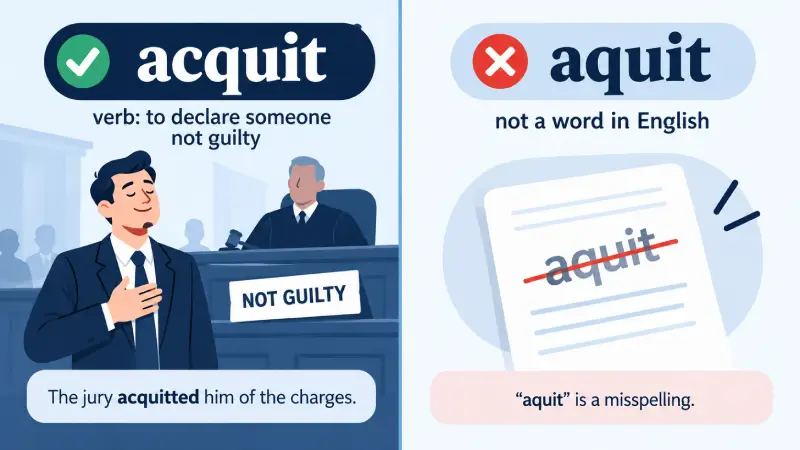

If you are wondering whether absence or abscence is the correct spelling, the answer is absence. Abscence is a common misspelling and is not considered correct standard English.
The correct word is absence, which means the state of being away, missing, or not present.
Quick Answer: Absence or Abscence?
Absence is the correct spelling.
Abscence is incorrect.
Her absence was noticed immediately.
The teacher recorded his absence from class.
The key spelling pattern is abs-ence, not absc-ence.
Is Absence or Abscence Correct?
Absence is the standard spelling in American English and other forms of standard English.
The incorrect spelling abscence often occurs because the pronunciation can make the middle of the word difficult to hear clearly. However, the correct spelling does not contain a c after the s.
| Spelling | Correct? | Meaning |
|---|---|---|
| absence | ✅ Yes | The state of being away or not present |
| abscence | ❌ No | Misspelling of absence |
When writing an email, school assignment, report, or professional document, always use absence.
What Does Absence Mean?
Absence is a noun that refers to the state of someone or something not being present.
For example:
The student’s absence affected the group project.
Here, absence means that the student was not present.
The word can also describe the lack of something:
The absence of evidence made the claim difficult to support.
In this example, absence means a lack or shortage of evidence.
Therefore, absence can refer both to a person’s nonattendance and to the lack of something.
Why Is “Abscence” Incorrect?
Abscence is incorrect because the standard spelling of the word is absence.
A common mistake happens when writers insert c into the middle of the word. This may happen because several related English words contain the letter c, making the spelling seem more complicated than it actually is.
Remember:
absence ✅
abscence ❌
The correct word contains abs followed by ence.
How Do You Spell Absence?
The correct spelling is:
A-B-S-E-N-C-E
You can break it into two parts:
abs + ence = absence
The easiest point to remember is that there is no extra c after s.
absence ✅
abscence ❌
If you remember abs + ence, you can avoid this spelling mistake.
How Do You Pronounce Absence?
Absence is commonly pronounced approximately:
AB-suhns
The c in absence contributes to the s sound, but you do not pronounce an extra hard c sound.
Because the spelling and pronunciation do not match perfectly, some writers may accidentally add an unnecessary c.
However, the correct written form remains absence.
Absence in Everyday Conversation
Absence is commonly used when talking about someone not being present.
His absence was unusual because he rarely misses work.
We noticed her absence at dinner.
The child’s absence from school lasted three days.
Your absence was noticed by everyone.
In everyday conversation, people may also use simpler expressions such as being away or not being there, but absence remains completely natural.
Absence in School Writing
Students frequently use absence when discussing attendance.
The teacher explained that repeated absence could affect the student’s grade.
Her absence from class was due to illness.
The school keeps records of student absence.
His frequent absence made it difficult to complete the assignment.
In formal school writing, make sure to use absence, not abscence.
Absence in Professional Writing
The word absence is also common in workplace communication.
Please notify your manager about any planned absence.
Her unexpected absence delayed the meeting.
The company has a policy regarding employee absence.
During his absence, another employee handled the project.
Here, absence usually refers to an employee being away from work.
Absence in Formal and Academic Writing
In academic and formal writing, absence can describe both nonattendance and a lack of something.
The study discusses the absence of reliable evidence.
Researchers noted the absence of significant differences.
The absence of clear guidelines created confusion.
The report examines the absence of adequate resources.
This broader meaning makes absence useful in research, reports, essays, and professional analysis.
Absence Can Mean a Lack of Something
One important meaning of absence is the lack or nonexistence of something.
For example:
The absence of sunlight affected plant growth.
This does not mean that sunlight went somewhere. It means that sunlight was not present.
More examples include:
The absence of evidence raised questions.
The absence of clear instructions caused confusion.
The absence of rainfall damaged the crops.
The absence of support made the task more difficult.
This usage is especially common in academic and professional writing.
Absence vs. Attendance
- Absence and attendance have opposite meanings in many contexts.
- Absence means not being present.
Attendance means being present or the act of attending.
Compare:
His absence was recorded by the teacher.
His attendance was recorded by the teacher.
Another example:
Poor attendance can lead to repeated absence from class.
Understanding this difference can make it easier to use absence correctly.
Absence vs. Absent
- Absence is a noun, while absent is usually an adjective.
Absence
- Her absence surprised everyone.
Absent
She was absent from class.
The words are related but serve different grammatical roles.
Compare:
His absence was unexpected.
He was absent yesterday.
A useful way to remember this is:
absence = the state or fact of not being present
absent = not present
Common Phrases With Absence
Here are some common expressions containing absence:
- absence from school
- absence from work
- absence of evidence
- absence of information
- absence of support
- absence of leadership
- during his absence
- in her absence
- extended absence
- unexpected absence
Examples
The teacher contacted his parents after his absence from school.
The absence of evidence weakened the argument.
Please contact the office during her absence.
The manager handled the issue in his absence.
“In the Absence of” Meaning
The phrase in the absence of means when something is not available or not present.
For example:
In the absence of clear instructions, employees used their best judgment.
This means that clear instructions were not available.
Another example:
In the absence of evidence, the claim could not be verified.
This phrase is particularly common in formal, academic, legal, and professional writing.
“In Someone’s Absence” Meaning
The phrase in someone’s absence means while that person is away or not present.
The assistant handled the meeting in the manager’s absence.
Decisions were made in her absence.
The team continued working in his absence.
This expression is common in both everyday and professional English.
Common Misspellings of Absence
Here are some forms you may encounter:
| Incorrect | Correct |
|---|---|
| abscence | absence |
| absense | absence |
| absance | absence |
| abscense | absence |
| absense | absence |
The most important one to remember for this comparison is:
absence ✅
abscence ❌
A Simple Trick to Remember Absence
Use this spelling pattern:
ABS + ENCE = ABSENCE
Do not add an extra c after s.
You can also connect it with absent:
absent → absence
The spelling changes slightly at the ending, but the beginning abs- stays the same.
absent
absence
This connection can help you remember the correct spelling.
Frequently Asked Questions About Absence vs. Abscence
Is absence or abscence correct?
Absence is correct. Abscence is a misspelling.
How do you spell absence?
The correct spelling is A-B-S-E-N-C-E: absence.
What does absence mean?
Absence means the state of being away or not present. It can also mean the lack of something.
Why do people spell absence as abscence?
The mistake often occurs because the pronunciation and spelling can be confusing. Some writers mistakenly insert an extra c into the word.
Is abscence a word?
No. Abscence is not the standard spelling. The correct word is absence.
What is the difference between absence and absent?
Absence is a noun describing the state of not being present, while absent is an adjective describing someone or something that is not present.
His absence was unexpected.
He was absent yesterday.
What is the opposite of absence?
The opposite of absence is generally presence.
Her absence was noticed.
Her presence made everyone feel comfortable.
Can absence mean a lack of something?
Yes. Absence can mean that something is missing or not available.
The absence of evidence made the conclusion uncertain.
Quick Comparison: Absence vs. Abscence
| Word | Correct? | Meaning |
|---|---|---|
| Absence | ✅ Yes | Being away, not present, or lacking something |
| Abscence | ❌ No | Misspelling of absence |
| Absent | ✅ Yes | Not present |
| Presence | ✅ Yes | The state of being present |
Conclusion
Absence is the correct spelling, while abscence is incorrect. The word absence can describe someone’s failure to be present or the lack of something.
Remember the simple spelling pattern:
ABS + ENCE = ABSENCE
If you are writing about someone’s absence from school, an employee’s absence from work, or the absence of evidence, always use absence, not abscence.