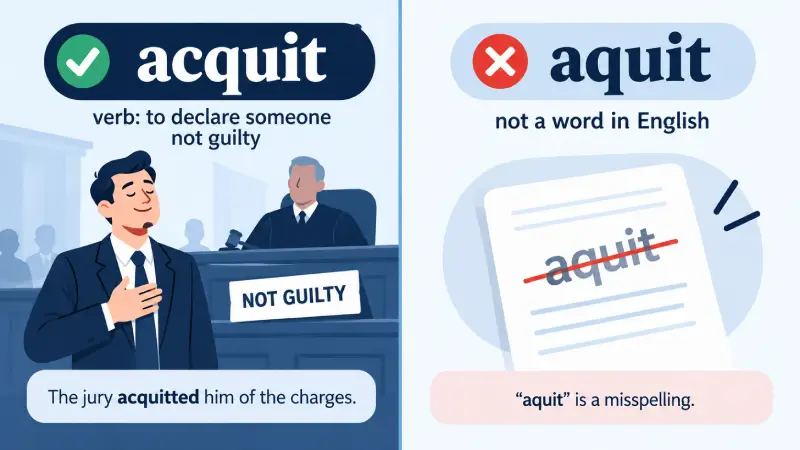

Coolly is the standard spelling when you mean “in a calm, controlled, or unemotional manner.” Cooly is a different word: it is a variant spelling of coolie, a historical term for an unskilled laborer that is now generally considered offensive when used for a person.
So, if you are writing a sentence such as “She coolly explained the situation,” the correct spelling is coolly, not cooly.
What Is the Difference Between Coolly and Cooly?
The confusion between coolly and cooly usually comes from the way the words look and sound. However, they do not serve the same grammatical function.
Coolly is an adverb formed from the adjective cool. It describes how someone does something, especially when that person remains calm, composed, deliberate, or emotionally controlled.
He coolly responded to the criticism.
Here, coolly tells us how he responded.
Cooly, by contrast, is a noun variant of coolie. It does not function as the adverb formed from cool. Dictionary sources list cooly as a variant of coolie.
The distinction can therefore be summarized very simply:
- coolly = in a cool, calm, or controlled manner
- cooly = a variant spelling of coolie, a historical and now offensive term in many uses
For modern American English writing, if you need the adverb meaning “in a calm or controlled way,” use coolly.
Why Is It Spelled Coolly?
The spelling coolly comes from cool + -ly.
The suffix -ly is commonly used to form adverbs from adjectives:
- calm → calmly
- quiet → quietly
- careful → carefully
- sudden → suddenly
- cool → coolly
The important spelling point is that cool already ends in l, and adding -ly produces coolly, with two consecutive l letters at the boundary.
Compare:
She remained cool during the interview.
with:
She answered the question coolly.
In the first sentence, cool is an adjective describing she.
In the second, coolly is an adverb describing answered.
American Heritage lists coolly as the adverb associated with cool. It defines cool in relevant senses as showing calm self-control and notes coolly as its adverbial form.
Cool + ly = Coolly
A useful way to see the formation is:
cool + ly → coolly
The two l letters are not an error or an unnecessary duplication. They are part of the standard spelling.
This is similar to other formations in English where the base word already ends in l:
- full → fully
- dull → dully
- skillful → skillfully
- cool → coolly
The exact spelling of adverbs can vary from word to word, so it is better to learn coolly as the established form rather than assuming every adjective ending in l will behave identically.
What Does Coolly Mean?
Coolly generally means in a calm, composed, deliberate, or emotionally controlled manner.
Depending on context, it can also suggest that someone is unfriendly, detached, indifferent, or lacking warmth.
That distinction matters because coolly does not always mean something positive.
Consider these examples:
She coolly handled the unexpected question.
Here, the word suggests composure and self-control.
He coolly rejected the proposal.
Here, it suggests a controlled and possibly detached response.
“That’s not my problem,” she said coolly.
In this sentence, coolly can suggest emotional distance or a lack of sympathy.
American Heritage gives cool several related senses, including calm self-control and an attitude that may be indifferent, disdainful, or unfriendly. Its entry also lists coolly as the corresponding adverb.
When Should You Use Coolly?
Use coolly when you need an adverb to describe an action performed in a calm, controlled, detached, or unemotional manner.
In Everyday Conversation
Maya coolly ignored the rude comment.
He coolly told everyone to wait outside.
She coolly answered the question and changed the subject.
Despite the confusion, Carlos coolly took charge.
The driver coolly explained what had happened.
These examples show how coolly can describe a person’s behavior when emotions might otherwise become obvious.
In Professional Writing
Coolly can describe controlled behavior in workplace or business contexts.
The manager coolly addressed the customer’s complaint.
She coolly defended the team’s decision during the meeting.
The negotiator coolly rejected the proposed terms.
He coolly explained why the deadline could not be moved.
In professional writing, coolly often emphasizes composure rather than literal temperature.
In School or Academic Writing
The word can also work naturally in essays and analytical writing when describing someone’s behavior or response.
The speaker coolly dismissed the opposing argument.
The character coolly observes the conflict without becoming involved.
The witness coolly described the events.
The author presents the criticism coolly rather than emotionally.
However, academic writers should choose the word because it accurately describes the tone or behavior, not simply because it sounds formal.
In Text Messages
In casual texting, coolly is grammatically correct, although people may choose simpler wording.
She just coolly walked away.
He coolly said, “I’m fine.”
They coolly handled the whole situation.
If you mean someone acted calmly, coolly is the appropriate spelling.
Can Coolly Mean “Without Emotion”?
Yes. Coolly can describe behavior that appears controlled, detached, or unemotional.
For example:
She coolly discussed the mistake instead of becoming upset.
The sentence does not necessarily mean that she felt no emotion. It describes how she behaved outwardly.
That distinction is useful. Someone can feel nervous, angry, or disappointed internally while still responding coolly.
For example:
Although he was frustrated, he coolly explained his concerns.
The contrast between frustrated and coolly is perfectly natural because one describes his emotional state while the other describes the manner of his response.
Is Cooly a Misspelling of Coolly?
Usually, if you are trying to write the adverb meaning “in a cool manner,” yes, cooly is the wrong spelling.
For example:
❌ She cooly answered the question.
✅ She coolly answered the question.
However, calling cooly simply a nonexistent word would be inaccurate. Dictionaries recognize cooly as a noun variant of coolie.
That means the two spellings should not be treated as two interchangeable versions of the same adverb.
If your intended sentence is about someone acting calmly, use coolly.
Coolly vs. Cooly: Side-by-Side Comparison
| Feature | Coolly | Cooly |
|---|---|---|
| Part of speech | Adverb | Noun |
| Basic meaning | In a cool, calm, controlled, or detached manner | Variant of coolie |
| Form | cool + -ly | Variant noun spelling |
| Modern use | Common and standard | Rare and mainly encountered in dictionary or historical contexts |
| Typical context | Describing how someone acts or responds | Historical references to coolie |
| Example | She coolly rejected the offer. | The historical text used cooly for coolie. |
| Use for “calmly”? | Yes | No |
The biggest practical difference is grammatical: coolly modifies an action, while cooly is a noun.
Common Mistakes With Coolly and Cooly
Mistake 1: Dropping One L
A writer may assume that coolly looks awkward and shorten it to cooly.
❌ He cooly responded to the accusation.
✅ He coolly responded to the accusation.
Remember that the adverb comes from cool + -ly, giving coolly.
Mistake 2: Assuming Cooly Is the Adverbial Form
Because words such as daily and early end in -ly, writers sometimes assume that cooly is the natural form.
That pattern does not apply here.
❌ She spoke cooly during the interview.
✅ She spoke coolly during the interview.
The standard adverb is coolly.
Mistake 3: Confusing It With Coolie
Cooly can appear in dictionaries as a variant of coolie, so someone who encounters the word may mistakenly think it is another spelling of coolly. It is not.
The historical noun coolie refers to an unskilled laborer, particularly in historical references to Asian workers. Modern dictionary entries also identify the term as disparaging or offensive when used as a label for a person.
Therefore, it is especially important not to use cooly casually when you mean coolly.
Mistake 4: Relying on Sound Alone
In ordinary speech, coolly and some forms of cooly can sound similar enough to cause spelling confusion.
That makes this a classic case where pronunciation is not enough to determine the spelling.
If you hear:
“She answered ___.”
ask yourself what the missing word means.
If it means “in a calm or controlled manner,” the spelling is:
coolly
How to Tell Coolly and Cooly Apart Fast
Use this simple test:
The “How?” Test
If the word answers how someone did something, use coolly.
How did she respond?
She responded coolly.
How did he handle the criticism?
He handled it coolly.
How did the player react?
The player reacted coolly.
If you can replace the word with calmly, composedly, or without showing much emotion, coolly is probably the word you need.
The Two-L Test
When you mean “in a cool manner,” remember:
COOL + LY = COOLLY
The base word cool keeps its two l letters.
So:
cool → coolly
not:
cool → cooly
Coolly in Different Contexts
A Text Exchange
Sam: Did you hear what Jordan said in the meeting?
Alex: Yeah.
Sam: How did Jordan react?
Alex: Jordan coolly said it wasn’t worth arguing about and moved on.
Here, coolly describes the manner of Jordan’s response.
A Workplace Email
The client raised several concerns during the call. Maria coolly addressed each point, explained the changes, and confirmed that the revised schedule would be sent by Friday.
The word emphasizes Maria’s composure while dealing with a difficult discussion.
An Article-Style Passage
The final minutes of the game became increasingly tense. Rather than rushing the decision, the goalkeeper coolly waited for the right moment and made the save.
Here, coolly highlights calm decision-making under pressure.
Coolly vs. Calmly
Coolly and calmly overlap, but they are not always identical.
Calmly generally emphasizes a lack of agitation or excitement.
She calmly explained the instructions.
Coolly can suggest calmness but may add a sense of emotional distance, deliberate control, or lack of warmth.
She coolly rejected the suggestion.
The second sentence can imply that the rejection was controlled and perhaps somewhat detached.
Therefore, replacing coolly with calmly may preserve the basic idea while removing part of the original tone.
Coolly vs. Coldly
These words are also related but can create different impressions.
Coolly often suggests composure, self-control, or detachment.
He coolly handled the pressure.
Coldly more strongly suggests a lack of warmth, sympathy, or friendliness.
He coldly dismissed her concerns.
The distinction is not absolute, because coolly can itself imply emotional distance. Still, coldly generally carries a stronger suggestion of interpersonal unfriendliness.
Coolly vs. Casually
Coolly can sometimes overlap with casually, especially when describing someone who does not appear concerned.
She coolly brushed aside the criticism.
She casually brushed aside the criticism.
The first emphasizes controlled detachment. The second emphasizes a relaxed or unconcerned manner.
The words are therefore related but not interchangeable in every context.
Is Coolly a Standard American English Word?
Yes. Coolly is a standard English adverb and is listed in major dictionary resources. American Heritage gives it as the adverbial form associated with cool, while Merriam-Webster materials likewise list coolly as an adverb derived from cool.
For ordinary US English writing in 2026, coolly is the form to use when you mean “in a cool, calm, or controlled manner.”
Is Cooly Ever Correct?
Yes, but not as the ordinary adverb meaning “calmly.”
Cooly is recognized as a variant spelling of coolie, which is a noun. Dictionary.com lists cooly under that noun meaning and gives it as a variant of coolie.
Because coolie can be offensive when used as a label for a person, modern writers should be especially careful with historical terminology and should use more precise, neutral language when describing people.
Thus, the fact that cooly exists as a dictionary word does not make it an alternative spelling of coolly.
FAQ
Is coolly or cooly correct?
For the meaning “in a calm, controlled, or unemotional manner,” the correct spelling is coolly. Cooly is a different noun and a variant of coolie.
Is cooly a real word?
Yes. Cooly is listed as a variant of coolie, but it is not the standard adverb formed from cool.
Why does coolly have two Ls?
Because it is formed from cool + -ly. The base word cool already ends in ll, so the standard adverb is coolly.
What does coolly mean in a sentence?
Coolly means that someone performs an action in a calm, controlled, deliberate, or sometimes emotionally detached manner.
She coolly rejected the accusation.
Is coolly the same as calmly?
They can overlap, but coolly can also suggest emotional distance or detachment, while calmly mainly emphasizes a lack of agitation.
Conclusion
Coolly is the correct spelling when you mean “in a cool, calm, controlled, or emotionally detached manner.” It is an adverb formed from cool + -ly.
Cooly is not an alternative spelling of that adverb. It is a noun variant of coolie, a term associated mainly with historical usage and one that can be offensive when applied to people.
The easiest rule to remember is:
Cool + ly = coolly
So write:
She coolly handled the difficult situation.
Not:
She cooly handled the difficult situation.
When the intended meaning is “calmly” or “in a controlled manner,” choose coolly every time.

Olivia Smith is a US English writer and language enthusiast who specializes in spelling, word choice, and commonly confused words. She creates clear, practical guides that help readers understand the correct spelling, meaning, and usage of English words.
At GrammarPool.com, Olivia focuses on spelling-choice topics, common spelling mistakes, and easy-to-understand explanations for everyday English users. Her writing is designed to make confusing word choices simple, accurate, and easy to remember.
Expertise: US English, spelling, word choice, commonly confused words, grammar, and language usage.