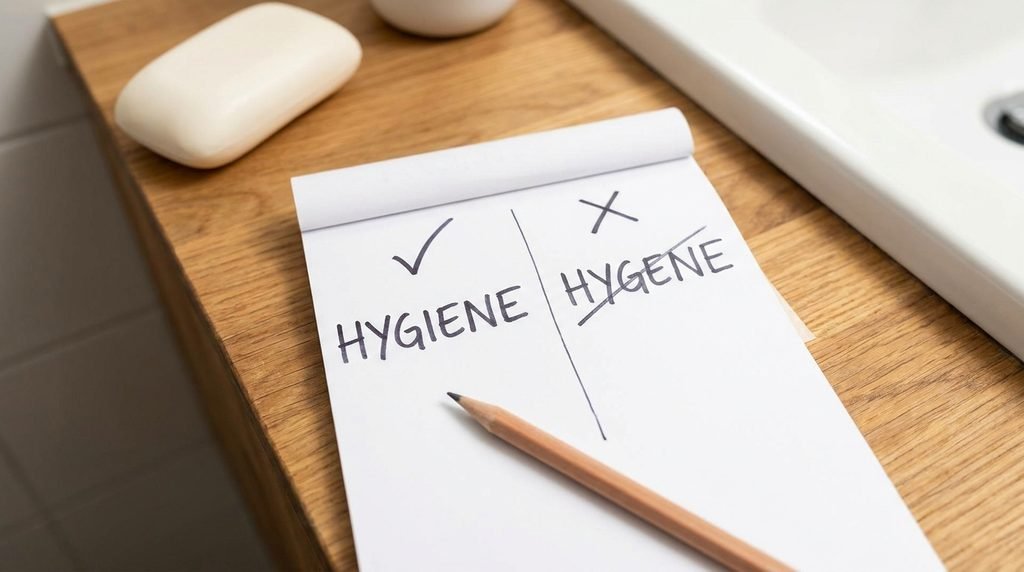
Hygiene is the correct spelling in standard English, while hygene is a misspelling. The word hygiene refers to practices that help maintain cleanliness, health, and personal well-being. For example, personal hygiene includes washing your hands, brushing your teeth, bathing regularly, and wearing clean clothes.
The main difference between hygiene vs hygene is the letter i. The correct spelling is hygiene, with an i after the g. Remembering this spelling will help you write accurately in school assignments, professional documents, health-related articles, and everyday communication.
Quick Answer: Hygiene or Hygene?
- Correct spelling: Hygiene
- Incorrect spelling: Hygene
- Part of speech: Noun
- Pronunciation: /ˈhaɪ.dʒiːn/ (HY-jeen)
- Meaning: Practices that maintain cleanliness and help protect health.
- Example: Good hygiene includes washing your hands before eating.
Standard dictionaries recognize hygiene as the correct spelling.
definition in the Cambridge English Dictionary
+1
What Does Hygiene Mean?
Hygiene refers to the habits, practices, and principles people follow to maintain cleanliness and protect their health. These practices can apply to the body, teeth, food, living spaces, workplaces, and other environments.
For example, brushing your teeth, washing your hands, cleaning your kitchen, and wearing clean clothes are common hygiene practices.
The word is commonly used in everyday conversations, healthcare, education, food preparation, and workplace safety. It is a standard English word rather than slang or an informal expression.
Examples of Hygiene in Sentences
- Good personal hygiene helps me feel clean and comfortable.
- Children should learn proper hygiene habits at an early age.
- The restaurant follows strict food hygiene standards.
- Regular brushing and flossing improve oral hygiene.
- Washing your hands is an important hygiene practice.
- The school teaches students about health and hygiene.
- Maintaining a clean kitchen supports better household hygiene.
In each example, hygiene refers to habits or standards that promote cleanliness and health.
What Does Hygene Mean?
Hygene is a common misspelling of hygiene. It does not represent the standard spelling of the English noun.
People may write hygene because they remember the pronunciation but forget the letter i in the middle of the word. However, the correct spelling remains hygiene in standard American English.
- Incorrect: Good hygene is important for children.
- Correct: Good hygiene is important for children.
- Incorrect: The school promotes personal hygene.
- Correct: The school promotes personal hygiene.
- Incorrect: Proper hygene helps prevent the spread of germs.
- Correct: Proper hygiene helps prevent the spread of germs.
For schoolwork, professional writing, websites, and other formal documents, always use hygiene.
Hygiene vs Hygene: Key Differences
| Feature | Hygiene | Hygene |
|---|---|---|
| Spelling status | Correct | Misspelling |
| Part of speech | Noun | Not the standard noun spelling |
| Meaning | Cleanliness and health practices | No standard meaning intended in this comparison |
| Dictionary usage | Standard English | Nonstandard spelling |
| Example | Good hygiene matters. | Good hygene matters. |
The easiest way to remember the difference is to focus on the i in hygiene. Without that letter, the word is misspelled.
Types of Hygiene and Their Meanings
The word hygiene appears in several common expressions. Learning these related words and phrases helps you understand how to use the word correctly in different contexts.
1. Personal Hygiene
Personal hygiene means keeping your body clean through regular care and healthy habits.
Examples include:
- Taking regular baths or showers.
- Washing your hands with soap.
- Wearing clean clothes.
- Keeping your nails clean.
- Using appropriate personal hygiene products.
Example: Good personal hygiene can help you feel fresh and comfortable throughout the day.
2. Oral Hygiene
Oral hygiene refers to caring for your teeth, gums, and mouth.
Common oral hygiene practices include brushing your teeth, flossing, and visiting a dentist when needed.
Example: Brushing twice daily is an important part of good oral hygiene.
3. Food Hygiene
Food hygiene involves handling, preparing, storing, and serving food safely to reduce contamination and the risk of illness.
Example: Restaurant workers must follow proper food hygiene practices when preparing meals.
4. Dental Hygiene
Dental hygiene focuses on maintaining clean, healthy teeth and gums. It overlaps with oral hygiene, although people sometimes use the terms in slightly different ways.
Example: Regular brushing and professional dental care support good dental hygiene.
5. Environmental Hygiene
Environmental hygiene involves maintaining clean surroundings, including homes, schools, workplaces, and public spaces.
Example: Regular waste removal and cleaning improve environmental hygiene.
6. Sleep Hygiene
Sleep hygiene refers to habits and routines that support healthy sleep.
Examples include maintaining a consistent bedtime, limiting late-night caffeine, and creating a comfortable sleeping environment.
Example: A regular bedtime can help improve sleep hygiene.
Related Words for Hygiene
Several words are connected to hygiene, but each has a slightly different meaning.
| Related word | Meaning | Example |
|---|---|---|
| Hygienic | Promoting or maintaining cleanliness and health | The kitchen is clean and hygienic. |
| Hygienically | In a manner that supports cleanliness and health | Food must be prepared hygienically. |
| Hygienist | A professional who specializes in a field of hygiene, such as dental care | The dental hygienist cleaned her teeth. |
| Hygienics | The study or science of maintaining health through hygiene | The course covers the principles of hygienics. |
| Cleanliness | The condition of being clean | Cleanliness matters in food preparation. |
| Sanitation | Measures that protect public health through safe waste disposal, clean water, and related practices | Proper sanitation helps protect communities. |
| Sterilization | The process of eliminating all forms of microbial life from an item or material | Medical instruments may require sterilization. |
| Disinfection | The process of destroying or inactivating many harmful microorganisms on surfaces or objects | The staff completed the disinfection of the equipment. |
These terms are related, but they are not interchangeable in every situation. For instance, cleanliness describes a condition, while hygiene often refers to the habits and practices used to maintain health.
How to Remember the Correct Spelling of Hygiene
If you frequently confuse hygiene with hygene, use these simple spelling tips.
1. Remember the Letter I
The correct spelling contains the letter i:
H-Y-G-I-E-N-E
The incorrect version, hygene, leaves out the i.
2. Practice With Common Phrases
Memorize familiar expressions that use the correct spelling:
- Personal hygiene
- Good hygiene
- Poor hygiene
- Oral hygiene
- Food hygiene
- Hygiene practices
Using these phrases regularly can help you recognize the correct spelling automatically.
3. Write a Practice Sentence
Try writing this sentence a few times:
“Good hygiene is important for maintaining health and cleanliness.”
Repeated practice can make the correct spelling easier to remember.
Why Do People Misspell Hygiene as Hygene?
The mistake often happens because English spelling does not always match pronunciation exactly.
In American English, hygiene is pronounced approximately HY-jeen. The middle letters are not pronounced separately, so someone who has only heard the word may incorrectly write hygene.
Other factors include unfamiliarity with the word, typing mistakes, and confusion about the letter sequence.
The best solution is to learn the written form alongside its meaning and pronunciation. If you are unsure, check a reliable dictionary before publishing or submitting your writing.
Frequently Asked Questions (FAQs)
Is Hygiene or Hygene Correct?
Hygiene is correct. Hygene is a misspelling of the standard English word. Use hygiene when discussing cleanliness and practices that help maintain health.
What Does Hygiene Mean in Simple English?
Hygiene means keeping yourself and your surroundings clean to support good health and help prevent illness. Examples include washing your hands, brushing your teeth, and keeping food preparation areas clean.
How Do You Spell Hygiene Correctly?
The correct spelling is hygiene, with an i after the g. Remember the letter sequence H-Y-G-I-E-N-E.
Is Hygene a Real Word?
Hygene is not the standard spelling of the English word meaning cleanliness and health practices. In ordinary writing, use hygiene instead.
What Is the Difference Between Hygiene and Sanitation?
Hygiene often refers to personal habits and practices that maintain health, while sanitation generally refers to systems and measures that protect public health, such as safe waste disposal and sewage management. The concepts overlap, but their meanings differ.
What Are Some Words Related to Hygiene?
Common hygiene-related words include hygienic, hygienically, hygienist, cleanliness, sanitation, disinfection, and sterilization. Each describes a related aspect of cleanliness, health, or infection prevention.
Final Thoughts
When comparing hygiene vs hygene, remember that hygiene is the correct spelling, while hygene is a common spelling mistake. Hygiene refers to the habits and practices that help maintain cleanliness and protect health.
Whether you are writing about personal hygiene, oral hygiene, food hygiene, or environmental hygiene, always include the i in hygiene. This simple spelling rule will help you communicate clearly and write more accurately.

Olivia Smith is a US English writer and language enthusiast who specializes in spelling, word choice, and commonly confused words. She creates clear, practical guides that help readers understand the correct spelling, meaning, and usage of English words.
At GrammarPool.com, Olivia focuses on spelling-choice topics, common spelling mistakes, and easy-to-understand explanations for everyday English users. Her writing is designed to make confusing word choices simple, accurate, and easy to remember.
Expertise: US English, spelling, word choice, commonly confused words, grammar, and language usage.