
Olivia Smith

Olivia Smith is a US English writer and language enthusiast who specializes in spelling, word choice, and commonly confused words. She creates clear, practical guides that help readers understand the correct spelling, meaning, and usage of English words. At GrammarPool.com, Olivia focuses on spelling-choice topics, common spelling mistakes, and easy-to-understand explanations for everyday English users. Her writing is designed to make confusing word choices simple, accurate, and easy to remember. Expertise: US English, spelling, word choice, commonly confused words, grammar, and language usage.

Acquaintance vs. Acquaintence: Which Spelling Is Correct?

acquaintance vs acquaintence

Acquaintance vs. acquaintence is a common English spelling confusion. Both forms look similar, but only one is correct in standard English. If you are writing about someone you know casually or a person you have met, choosing the right spelling helps make your writing clear and professional. The correct spelling is acquaintance. The spelling acquaintence

Acquaintance vs. Acquaintence: Which Spelling Is Correct? Read More »

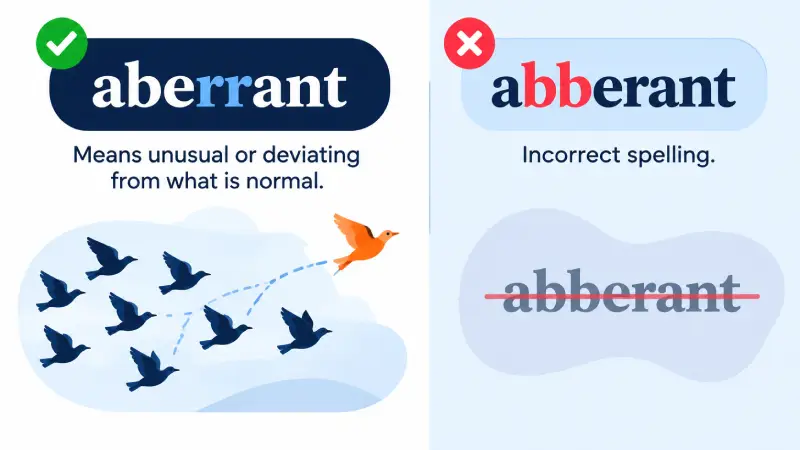
Aberrant vs. Abberant: Which Spelling Is Correct?

aberrant vs abberant

Aberrant is the correct spelling. Abberant is a common misspelling and is not the standard English form. If you are wondering whether to write aberrant or abberant, choose aberrant. The word is an adjective that describes something unusual, abnormal, or different from what is expected or typical. Quick Answer: Aberrant or Abberant? The correct spelling

Aberrant vs. Abberant: Which Spelling Is Correct? Read More »
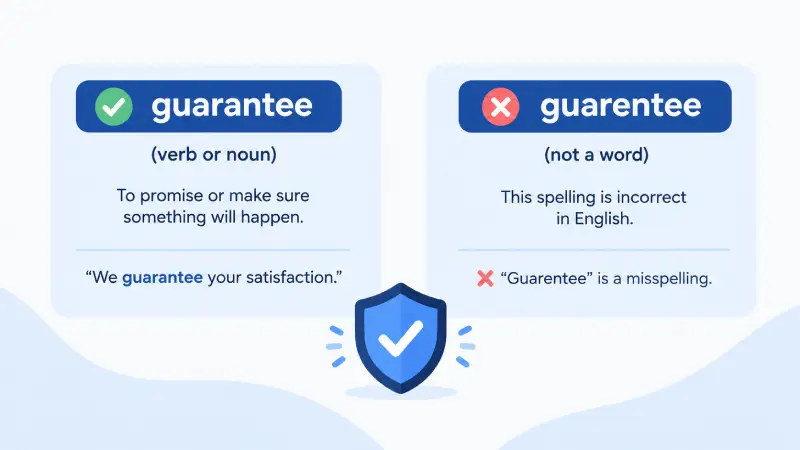
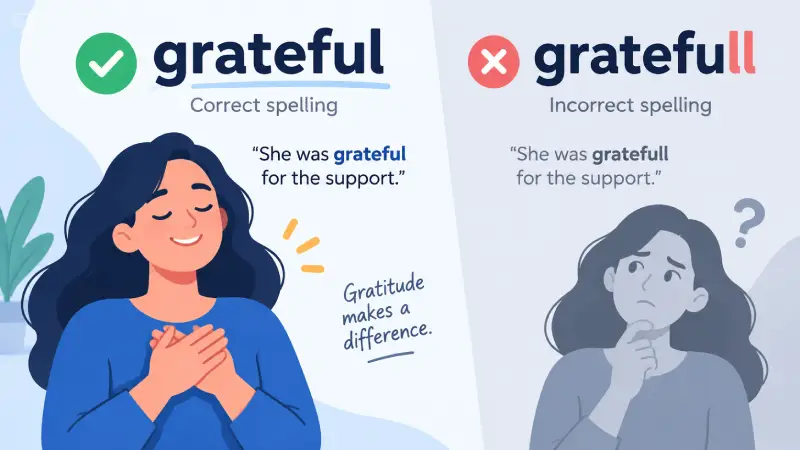
Grateful vs. Gratefull: Which Spelling Is Correct?

grateful vs gratefull

Grateful vs. gratefull is a common English spelling confusion. If you are unsure whether to write grateful or gratefull, the correct spelling is grateful. Gratefull is a misspelling. The correct word has only one L at the end: G-R-A-T-E-F-U-L This word is especially common when expressing appreciation, thanks, or a feeling of being thankful. Because

Grateful vs. Gratefull: Which Spelling Is Correct? Read More »
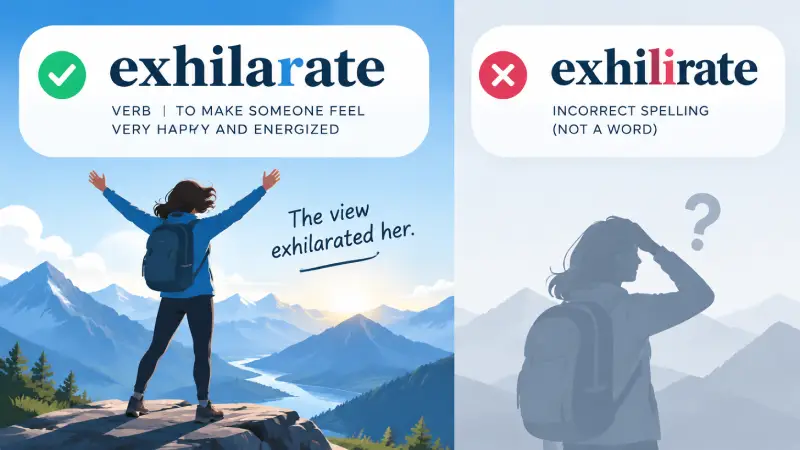
Exhilarate vs. Exhilirate: Which Spelling Is Correct?

exhilarate vs exhilirate

Exhilarate is the correct spelling. Exhilirate is a misspelling. If you are unsure whether to write exhilarate or exhilirate, the correct form is exhilarate, with “a” in the middle: exhilarate The verb exhilarate means to make someone feel extremely happy, excited, energized, or thrilled. It is commonly used when an experience creates a strong feeling

Exhilarate vs. Exhilirate: Which Spelling Is Correct? Read More »
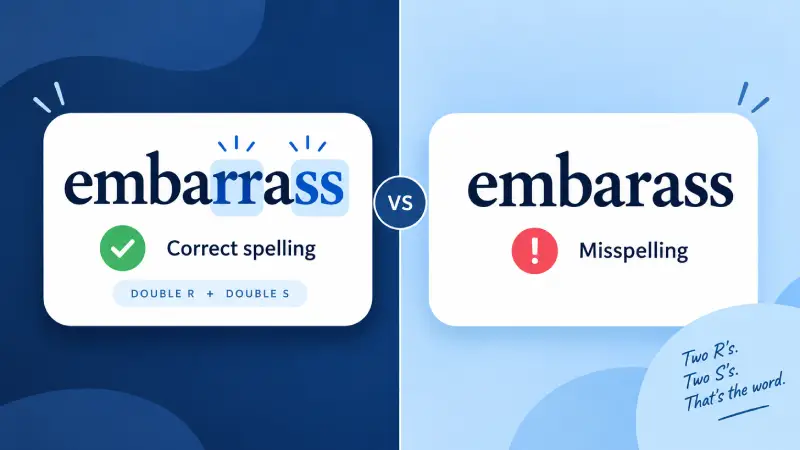
Embarrass vs. Embarass: Which Spelling Is Correct?

embarrass vs embarass

Embarrass is the correct spelling. Embarass is a misspelling. If you are unsure whether to write embarrass or embarass, remember that the correct spelling has two r’s and two s’s: embarrass The word embarrass is a verb meaning to make someone feel uncomfortable, self-conscious, ashamed, or awkward. It can also describe the feeling of causing

Embarrass vs. Embarass: Which Spelling Is Correct? Read More »
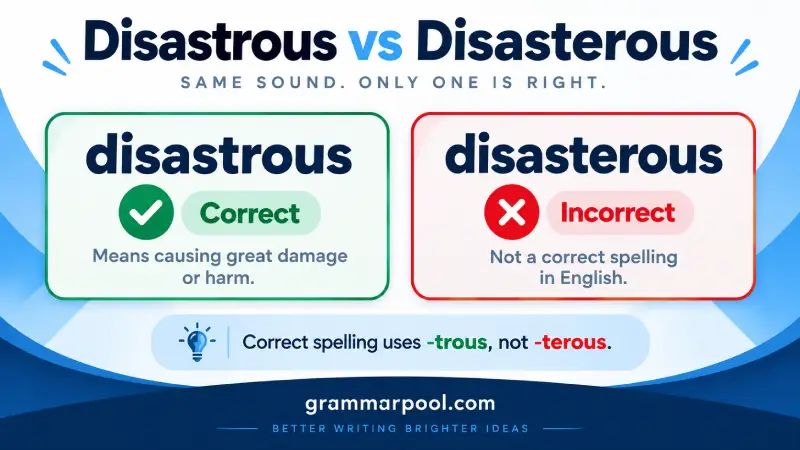
Disastrous vs. Disasterous: Which Spelling Is Correct?

disastrous vs disasterous

Is it disastrous or disasterous? The correct spelling is disastrous. Disasterous is a common misspelling. The word disastrous is an adjective used to describe something that causes a disaster, has extremely bad results, or produces serious damage or failure. The spelling can be confusing because the word comes from disaster, but it does not simply

Disastrous vs. Disasterous: Which Spelling Is Correct? Read More »
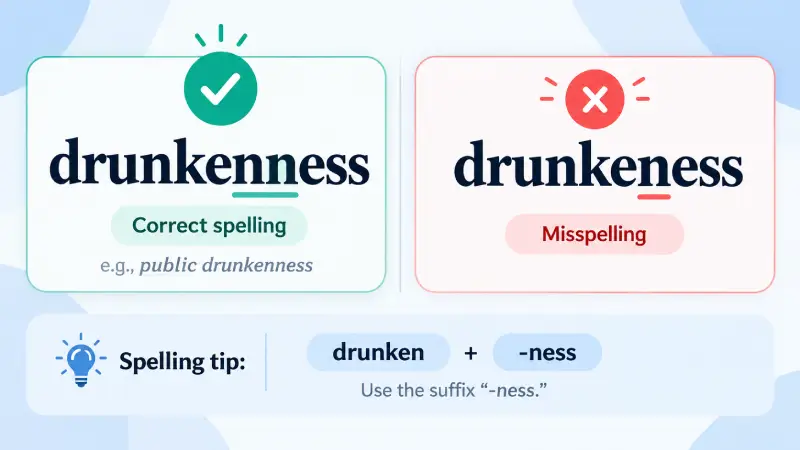
Drunkenness vs. Drunkeness: Which Spelling Is Correct?

drunkenness vs drunkeness

Drunkenness is the correct spelling. Drunkeness is a misspelling. If you are unsure whether to write drunkenness or drunkeness, remember that the correct word contains “kn” + “enness” after the base word drunken: drunkenness. The word drunkenness is a noun that describes the condition or state of being drunk. It can refer to noticeable intoxication

Drunkenness vs. Drunkeness: Which Spelling Is Correct? Read More »